Most couples who ask this question are already somewhere in the middle of planning a wedding in Portugal. They have looked at venues, searched for photographers, tried to build a sense of what the budget should look like. At some point, usually a few weeks in, the question arises: is what I am doing actually working?
One bride from United States described the feeling as being like a minefield. Every step they took felt like it could go wrong because they were unfamiliar with the local reality.
At Name It Weddings & Events, this is the moment when many couples seek us out, after realizing they lack the time, knowledge, experience, and access to the network of the best local suppliers.
Why This Question Comes Up
The process begins, for most couples, with a burst of energy. Venues are researched, ideas are collected, lists are started. Then the scale of it becomes clear in the number of decisions that require answers no one around you can confidently give.
There are no local contacts to call. Every question requires a new email to someone who does not know you. Every decision requires confirming something that cannot easily be verified from a distance. And all of it happens on top of a full working life, mostly in the evenings and at weekends, with whatever energy remains after the rest of the day.
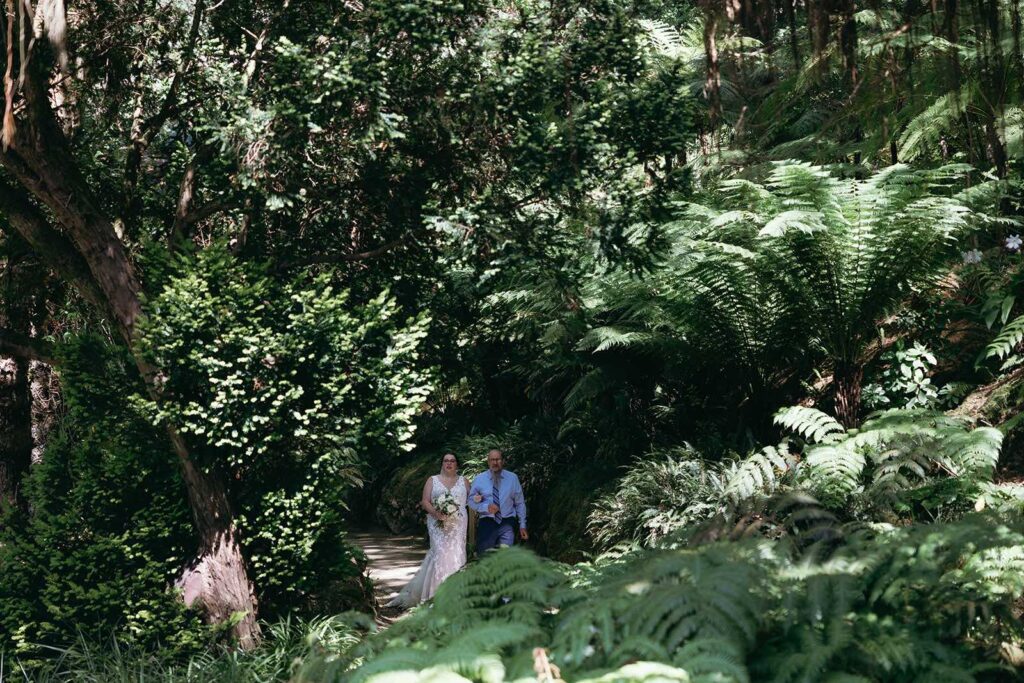
What Planning a Wedding in Portugal Alone Actually Looks Like
Most of the work happens after hours. Energy is lower, and a celebration becomes a list of tasks to get through rather than decisions to make carefully.
The weekend, which feels like the natural time to focus, is when most wedding suppliers are unavailable. Caterers, florists, makeup artists and decorators work weddings at weekends during the season. Meetings happen during the week. Couples who do not know this spend weeks waiting for replies.
There is also the problem of planning service by service. Each supplier is confirmed separately. When the couple tries to organize everything months later, the gaps become apparent. There are many details and costs that were not foreseen at the initial stage.
For example, the couple books a venue that is 80 kilometers from Lisbon (about a 1 hour drive). The furniture rental company will charge for transportation. The same happens with the makeup artist and with the hairdresser. Some teams need accommodation the night before. And suddenly, the estimated wedding budget continues to grow because of details that were never visible at the start.
A wedding planner works during business hours. When the couple is free, the search is already done, the options have been filtered, and a shortlist is ready for analysis and decision. This is how the planning process changes when someone on-site dedicates their workday to it.
When a Wedding Planner Makes a Real Difference
There are moments when the question answers itself.
When a couple is unsure of a reasonable price to pay for a photographer, the question that arises is: “Is six thousand euros too much, or is that the standard price?” The confusion stems from a lack of understanding of the local context. A wedding planner with direct knowledge of who does what, and at what standard, removes guesswork from decisions that would otherwise carry real financial risk.
When guests travel from multiple countries, coordination ceases to be a secondary task. It requires a lot of logistics, hotel reservations, transportation to the wedding venue, and many other details. Someone needs to have an overview of everything.
When the venue does not include its own coordinator, that role falls somewhere. It does not disappear.
And when what a couple most wants is to be present at their own wedding rather than coordinate it from the inside, a planner makes that possible. It matters most in intimate celebrations, where every guest and every moment is visible.
What the First Conversation Looks Like
At Name It Weddings & Events, the first conversation is not a proposal. It is a way of understanding where the couple is in the process, what they are finding difficult, and whether working together makes sense for both sides.
If you have already decided to move forward, the right questions to ask a wedding planner in Portugal is a useful next step.
For many couples, the decision becomes clear only when they can see the full picture. Not just individual services, but how everything connects. A conversation is often where that clarity begins.
NOTES
– Main Image Photography: JJMT
– All images featured in this article are from weddings planned and coordinated by NAME IT Weddings & Events